The short answerNFL standings rank teams by win percentage: wins plus half of any ties, divided by games played. Each conference sends seven teams to the playoffs: its four division winners, seeded 1 to 4 by record, and the three best remaining records as wild cards, seeded 5 to 7.
An NFL table looks simple: wins, losses, maybe a tie. But the order it puts teams in, and who ends up in the playoffs, depends on a few rules that are easy to miss. This guide covers all of them in the order they matter.
Win percentage decides the order
NFL standings are sorted by win percentage, not by wins. The two are usually the same thing, because every team plays the same number of games. They stop being the same when a game ends in a tie, and that is exactly the case the formula exists for.
A tie counts as half a win and half a loss. A team at 10-6-1 has played 17 games and has 10.5 wins' worth of results, so its win percentage is 10.5 ÷ 17 = .618. A team at 10-7 is at 10 ÷ 17 = .588, and sits below it.
| Record | Games | Calculation | PCT |
|---|---|---|---|
| 11-6 | 17 | 11 ÷ 17 | .647 |
| 10-6-1 | 17 | 10.5 ÷ 17 | .618 |
| 10-7 | 17 | 10 ÷ 17 | .588 |
In BuffScore's Tables tab, NFL standings show the W, L, T and PCT columns for exactly this reason: PCT is the column the order comes from.
Conferences and divisions
The league's 32 teams are split into two conferences, the AFC and the NFC. Each conference has four divisions of four teams: East, North, South and West. Teams play every division rival twice a season, which is why division games weigh so heavily in the tiebreakers below.
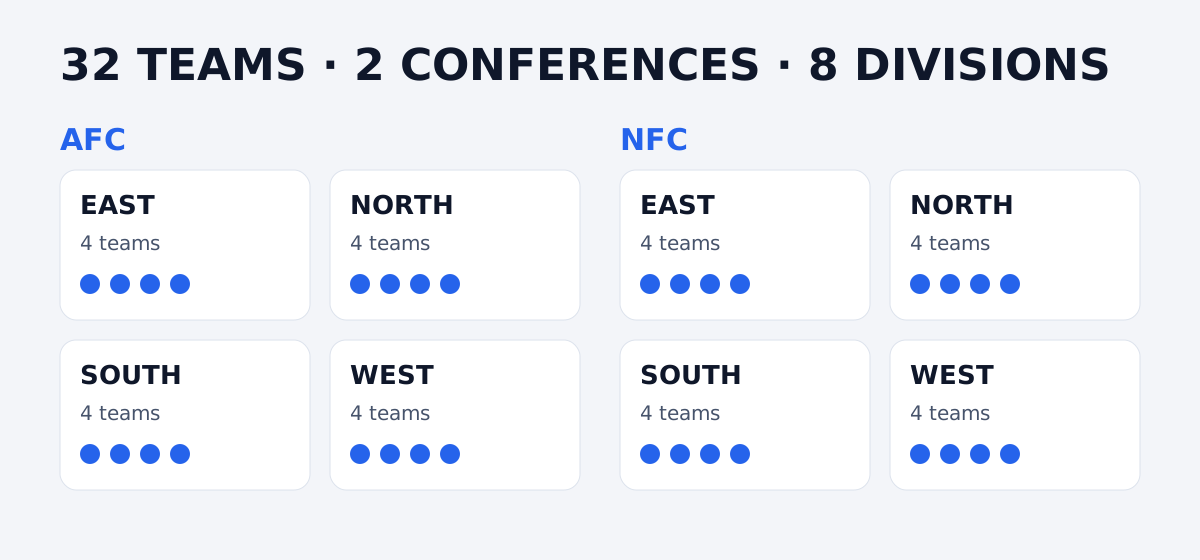
Standings are usually shown per division, because winning the division is the surest way into the playoffs. Conference standings rank all 16 teams in a conference together, which is the view that matters for wild card places.
How the playoffs are decided
Fourteen teams make the playoffs, seven from each conference:
- Seeds 1 to 4 are the four division winners, ranked by record. A division winner is always seeded above every wild card, even one with a better record.
- Seeds 5 to 7 are the wild cards: the three teams with the best records among those that did not win their division.
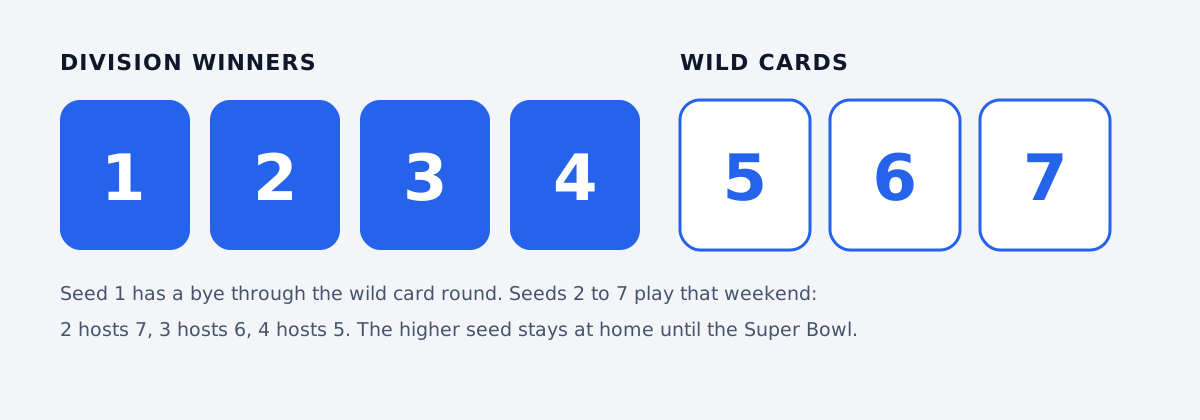
Only the number 1 seed gets a bye through the first round. On wild card weekend, seed 2 hosts seed 7, seed 3 hosts seed 6, and seed 4 hosts seed 5. After that, the highest remaining seed always plays the lowest, and the better seed hosts every game until the Super Bowl, which is played at a neutral site.
Tiebreakers, in order
When two teams in the same division finish with the same win percentage, the NFL separates them with a fixed sequence of tests. It stops at the first one that produces a winner:
- Head-to-head: the better record in the games between the two teams.
- Division record: the better win percentage in division games.
- Common games: the better win percentage against opponents both teams played.
- Conference record: the better win percentage in games within the conference.
If all four are level, the rules continue through strength of victory, strength of schedule and several points-based measures. Ties between teams in different divisions, which come up in the wild card race, use a similar list that starts with head-to-head and then conference record. When three or more teams are tied, the procedure changes again, so a three-way tie can resolve differently from any of the two-team comparisons inside it.
Reading the standings during the season
Early in the season, standings move a lot and say little: a 2-0 team and a 0-2 team are often closer than they look. By the last month, the tiebreakers start to matter, and division records in particular decide a surprising number of places. That is the point where it pays to look at the division view and the conference view side by side.
BuffScore's My teams screen shows each followed team's place and record at the top of its card, next to its next game and last result, so you can follow the race without opening the full table.
Scores, tables and alerts in one app
BuffScore is free on Android. No odds, no betting.