The short answerThe Champions League league phase is one table of 36 teams. Each team plays eight matches against eight different opponents, four at home and four away. The top eight go straight to the round of 16, teams 9 to 24 play a two-legged play-off for the other eight places, and teams 25 to 36 are eliminated.
For decades the Champions League began with eight groups of four. From the 2024/25 season it begins instead with a league phase: all 36 clubs in a single table, each playing a different set of opponents. The change made the competition bigger and the early rounds less predictable, and it also made the table harder to read at first glance. Here is how it works.
36 teams, eight matches each
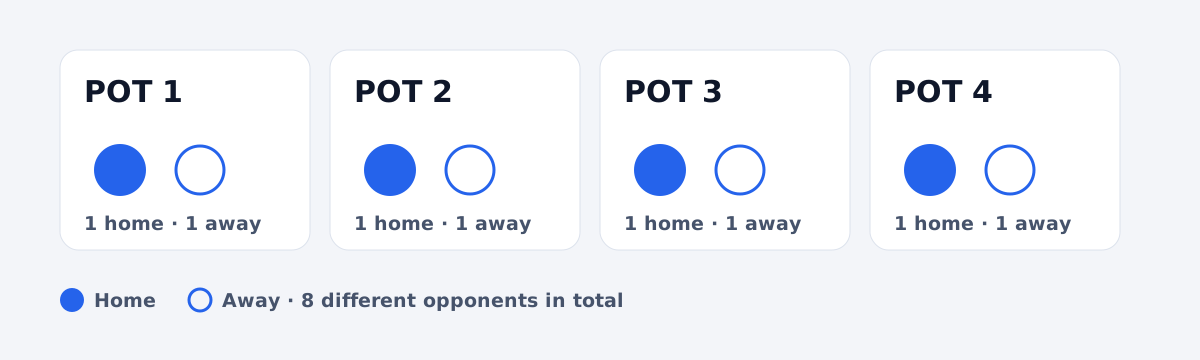
Every club plays eight matches in the league phase, four at home and four away, against eight different opponents. Nobody plays the same team twice, and nobody plays every other team, so each club's fixture list is unique.
The opponents come from a draw that uses four seeding pots of nine clubs, ranked by UEFA's club coefficient. Each club is drawn against two opponents from each pot, one at home and one away. Clubs cannot face opponents from their own country in the league phase, and the draw limits how many opponents one club can meet from any single other country.
One table, three zones
All results go into one 36-team table, ranked on points: three for a win, one for a draw, none for a defeat. At the end of the eighth matchday, the table splits into three zones.
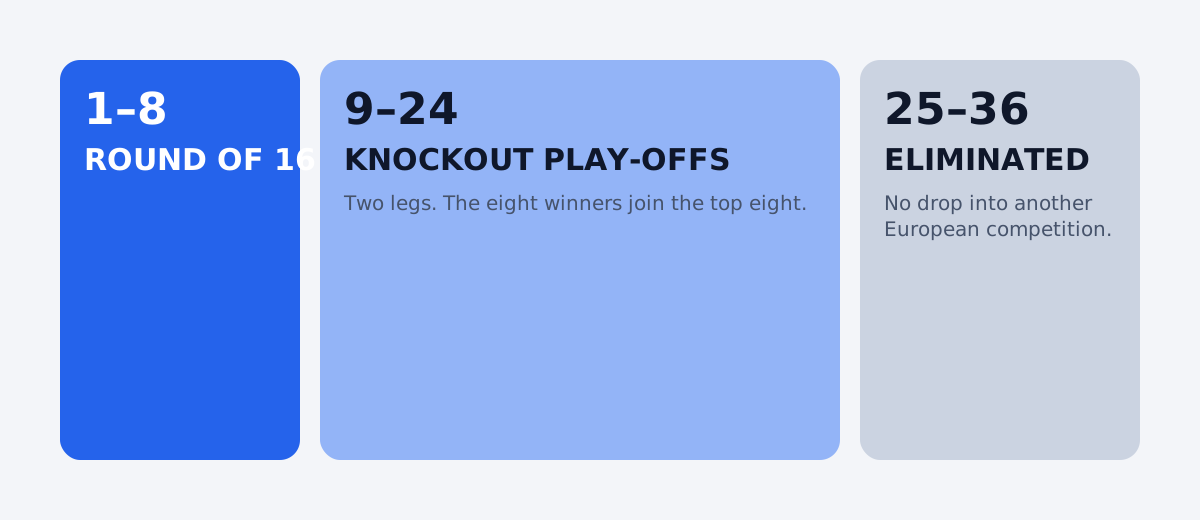
- 1st to 8th qualify directly for the round of 16.
- 9th to 24th play the knockout phase play-offs, a two-legged tie, for the remaining eight places in the round of 16.
- 25th to 36th are eliminated. Unlike the old third place in a group, finishing low does not drop a club into the Europa League.
Why the exact position matters
Position in the table also shapes the knockout bracket. Clubs placed 9th to 16th are seeded in the play-offs and host the second leg; they face clubs placed 17th to 24th. The winners then meet the top eight in the round of 16, where a higher league-phase finish again means hosting the second leg. So a club that is already sure of the top eight still has a reason to win its last match.
Breaking ties in the table
With 36 teams and only eight games each, ties on points are common. They are separated first by goal difference, then by goals scored, and then by further criteria, including away goals scored and the number of wins, set out in the competition's regulations. Head-to-head results are not the first tiebreaker, because two tied clubs will often not have played each other at all.
From the round of 16 to the final
From the round of 16 onwards the competition looks familiar: two-legged ties through the round of 16, the quarter-finals and the semi-finals, and a single-match final at a venue chosen in advance.
Following the league phase
The single table is the only place where the whole picture is visible, which makes it the most useful thing to check after each matchday. BuffScore shows the Champions League table in the Tables tab, alongside scores and results for every matchday, and match alerts for any club you follow.
Scores, tables and alerts in one app
BuffScore is free on Android. No odds, no betting.