The short answerGames behind (GB) is the difference in wins plus the difference in losses between a team and the leader, divided by two. A team at 45-24 trails a 50-20 leader by ((50 − 45) + (24 − 20)) ÷ 2 = 4.5 games.
Every NBA standings table has a column that confuses people the first time they see it: GB, or games behind. It answers a practical question, how far is my team from the top, in a way that plain wins cannot, because teams have rarely played the same number of games on the same day.
The formula
The division by two is the part that makes sense of it. When the leader loses and your team wins on the same night, the gap closes by a full game. When only one of those happens, it closes by half a game. So each half-game on the GB column is one result going your way.
A worked example
Say the conference leader is 50-20 and your team is 45-24.
- The win gap is 50 − 45 = 5.
- The loss gap is 24 − 20 = 4.
- Add them and halve it: (5 + 4) ÷ 2 = 4.5 games behind.
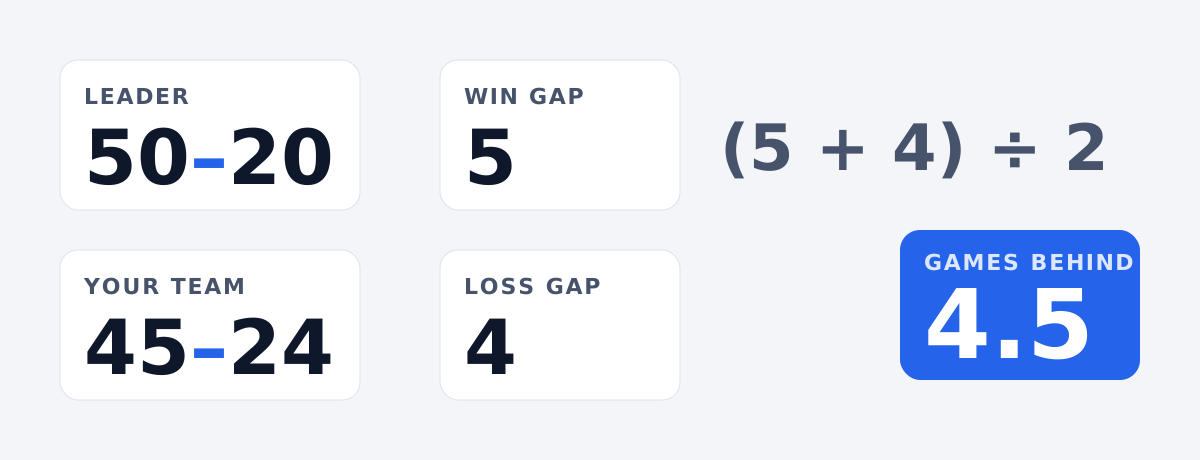
The leader always shows a dash, or 0, in the GB column. A team can also be level on GB with the leader while sitting second, because the table itself is ordered by win percentage, and two teams can have the same GB with different percentages when they have played different numbers of games.
Why GB and win percentage can disagree
NBA standings are sorted by win percentage (wins divided by games played). GB is shown alongside it as a way of reading the gap. Most of the time the two agree. They part company when schedules are uneven: a team with fewer games played can have a better percentage but a similar GB, because its unplayed games could go either way. Late in the season, when everyone has played close to 82, the two line up almost exactly.
How the table leads to the playoffs
The NBA has 30 teams in two conferences of 15, and each team plays an 82-game regular season. At the end of it, each conference is ranked on its own:
- Seeds 1 to 6 go straight into the playoffs.
- Seeds 7 to 10 enter the play-in tournament for the last two places.
- Seeds 11 to 15 are out.
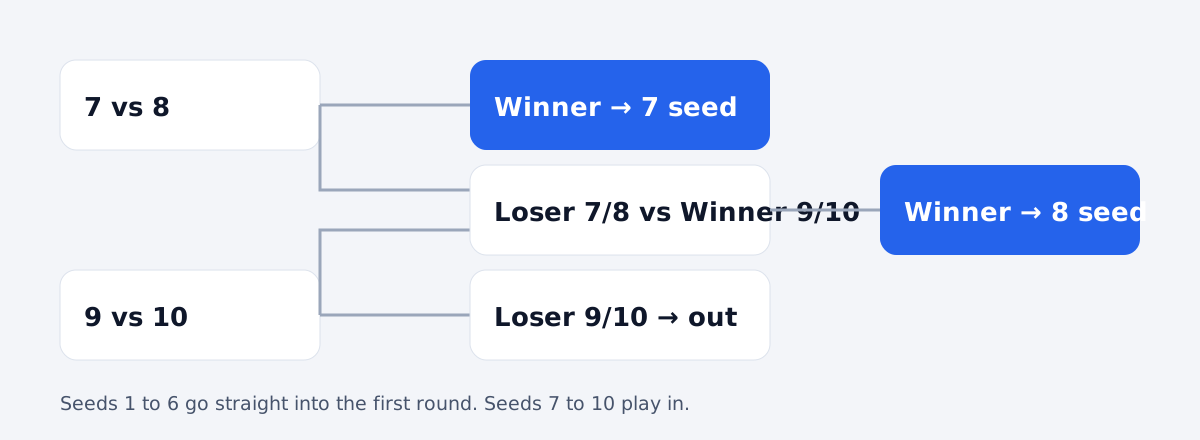
In the play-in, the 7th seed hosts the 8th, and the winner takes the 7 seed. The 9th hosts the 10th, and the loser is eliminated. Then the loser of 7-versus-8 hosts the winner of 9-versus-10, and the winner of that game takes the 8 seed. Finishing 7th or 8th is worth a lot: it means two chances to get in, where 9th and 10th get one.
Reading the race in March and April
In the last weeks of the season, GB is most useful between teams near a cut-off line rather than against the leader. The gap between 6th and 7th decides who avoids the play-in; the gap between 10th and 11th decides who gets into it at all. Work out GB between those two teams with the same formula and you know exactly how many results each side needs.
BuffScore's NBA standings show W, L, PCT and GB for each conference, and the My teams screen puts your team's place and record next to its next game.
Scores, tables and alerts in one app
BuffScore is free on Android. No odds, no betting.